Activated Carbon Filter for Pet Odors: What Actually Works?
If you live with cats or dogs, an activated carbon filter for pet odors can be useful—but only if you understand what the carbon is actually designed to do.
Pet odor is not the same problem as pet hair or dander. Hair is made of relatively large particles, dander is particulate matter, while many smells involve airborne gases and volatile compounds. These pollutants require different types of filtration.
Activated carbon is the part of an air-cleaning system designed to capture certain gases and odors. However, simply seeing “activated carbon filter” on a product box tells you surprisingly little about how well the purifier will handle persistent pet smells.
The amount of carbon, its physical form and chemistry, the depth of the filter bed, airflow, humidity, the pollutant itself, and how saturated the filter has become can all affect performance. And there is one particularly important limitation for cat owners: ordinary activated carbon should not automatically be assumed to remove ammonia effectively.
Here is what to look for before buying an activated carbon air purifier for a home with pets. If you need a product shortlist after understanding the filter basics, compare our pet odor air purifier recommendations.
Does Activated Carbon Remove Pet Odors?
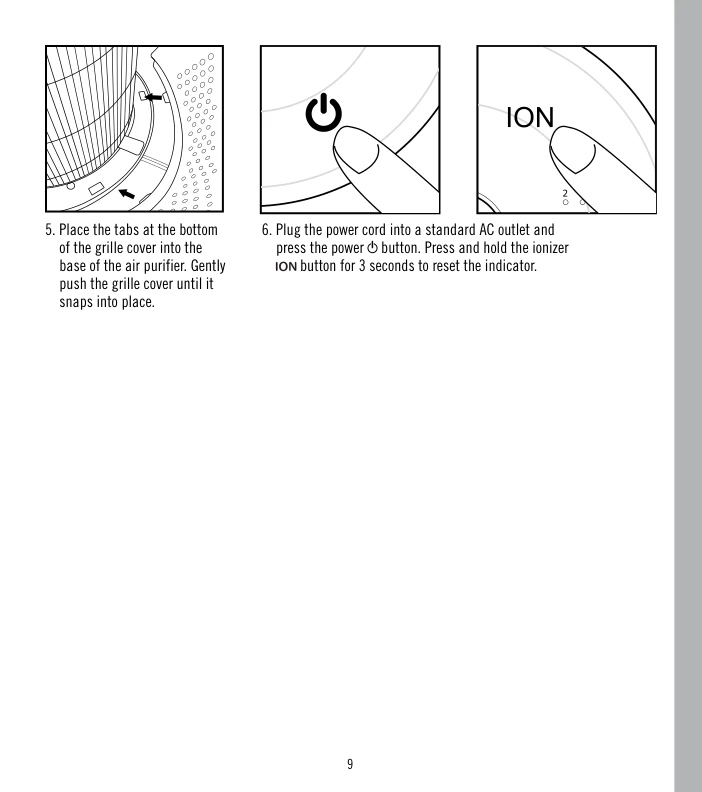
Activated carbon works through adsorption, not absorption.
During adsorption, gas molecules in the air attach to the surface of the carbon. Activated carbon has a highly porous structure with a large internal surface area, giving compatible gas and vapor molecules many surfaces on which to collect.
This makes activated carbon fundamentally different from a HEPA or other particle filter.
According to EPA guidance, activated carbon has the potential to remove many hydrocarbons, aldehydes and organic acids. But it is not equally effective against every gaseous pollutant. The EPA specifically notes limitations for pollutants including ammonia, hydrogen sulfide and some low-molecular-weight compounds.
That means the accurate answer to “Does activated carbon remove pet odor?” is:
It can reduce certain airborne pet-odor compounds, but it does not remove every type of pet odor or gas.
Real-world performance depends on more than the presence of carbon. Important variables include:
- the amount of activated carbon;
- carbon surface and chemistry;
- bed depth and contact time;
- airflow through the filter;
- humidity and temperature;
- pollutant type and concentration; and
- how close the filter is to saturation.
There is no evidence-backed universal rule such as “you need at least one pound of carbon for pet odors.” More carbon and a deeper bed can provide greater potential adsorption capacity, but carbon weight alone does not prove how efficiently a purifier will remove a specific gas.
Activated Carbon vs. HEPA: Which Do Pet Owners Need?
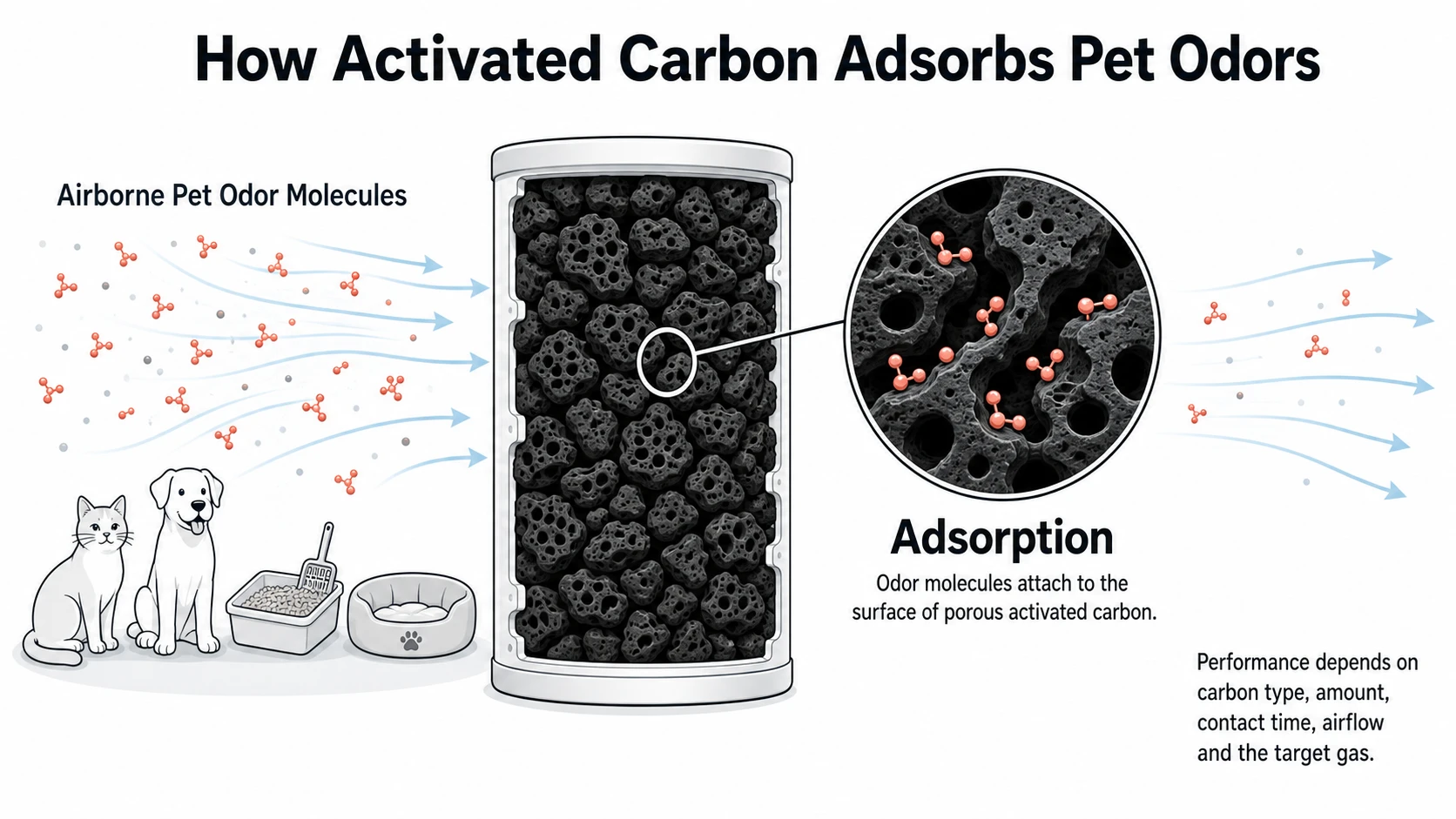
One of the most common mistakes when choosing a pet air purifier is expecting one filter technology to solve every problem.
| Pet problem | Best filtration role |
|---|---|
| Pet hair and lint | Pre-filter |
| Airborne pet dander and fine particles | HEPA or verified particle filter |
| Certain airborne pet odors and gases | Activated carbon or other gas media |
A washable or replaceable pre-filter is useful for capturing larger hair and lint before they reach the main filter. A HEPA or other effective particle filter handles airborne dander and fine particles. An activated carbon filter targets certain gaseous pollutants and odors.
For a combination of pet hair, dander and odor, a practical system combines pre-filter + particle filtration + gas filtration. For a broader model comparison across these needs, see our complete guide to the best air purifiers for pets.
Not All Activated Carbon Filters Are the Same
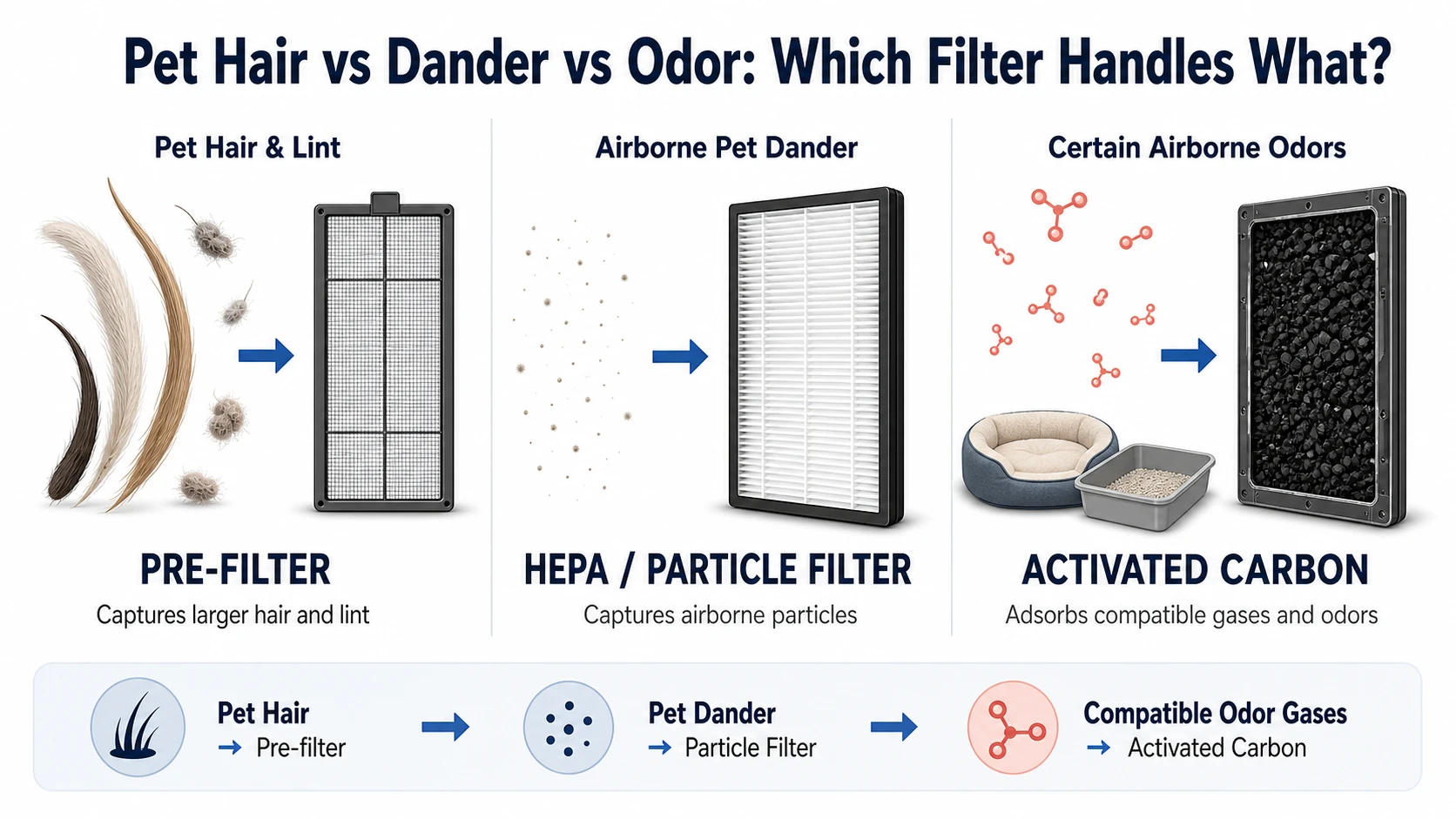
A thin black sheet and several pounds of granular activated carbon may both be marketed as an “activated carbon filter,” yet they are very different filtration systems.
Carbon-coated mesh and thin carbon sheets
These are common in consumer air purifiers because they are compact and create relatively little airflow resistance. Their limitation is that the amount of adsorbent is often small or not disclosed.
A thin carbon sheet may still be useful, but you should not assume that it will control persistent pet odors simply because the manufacturer uses the words “activated carbon.”
Granular or pelleted activated carbon
Granular activated carbon (GAC) uses contained carbon granules, while pelleted systems use formed carbon pellets. These formats can support a more substantial bed of adsorbent.
For persistent airborne odors, these are stronger candidates to investigate, especially when the manufacturer discloses the media quantity, chemistry or intended gases. However, granular or pelleted carbon is not automatically effective against every odor.
Deep carbon beds
A deeper bed allows manufacturers to use considerably more adsorbent and can increase potential capacity and contact volume. Still, a deep carbon bed is not proof of universal gas removal.
Impregnated or chemically treated media
Some gas filters combine activated carbon with chemically treated media or materials such as impregnated activated alumina. These systems can behave differently from ordinary activated carbon because chemisorption may target specific reactive pollutants.
Do not assume that any “treated carbon” filter removes ammonia or another particular gas unless the manufacturer identifies the media chemistry and relevant target pollutant.
How Much Activated Carbon Do Pet Odor Filters Actually Contain?
Carbon quantity is surprisingly difficult to compare because many consumer purifier manufacturers do not disclose it.
| Air purifier / filter | Manufacturer-disclosed gas media |
|---|---|
| Austin Air HealthMate | Up to 15 lb of activated carbon and zeolite combined |
| IQAir HealthPro Plus | 5 lb of granulated activated carbon and impregnated activated alumina combined |
| Shark HP302 HE3FKPET filter | 240 ± 10 g virgin carbon |
| Shark HP070/HP071-compatible pet filter | 90 ± 10 g virgin carbon |
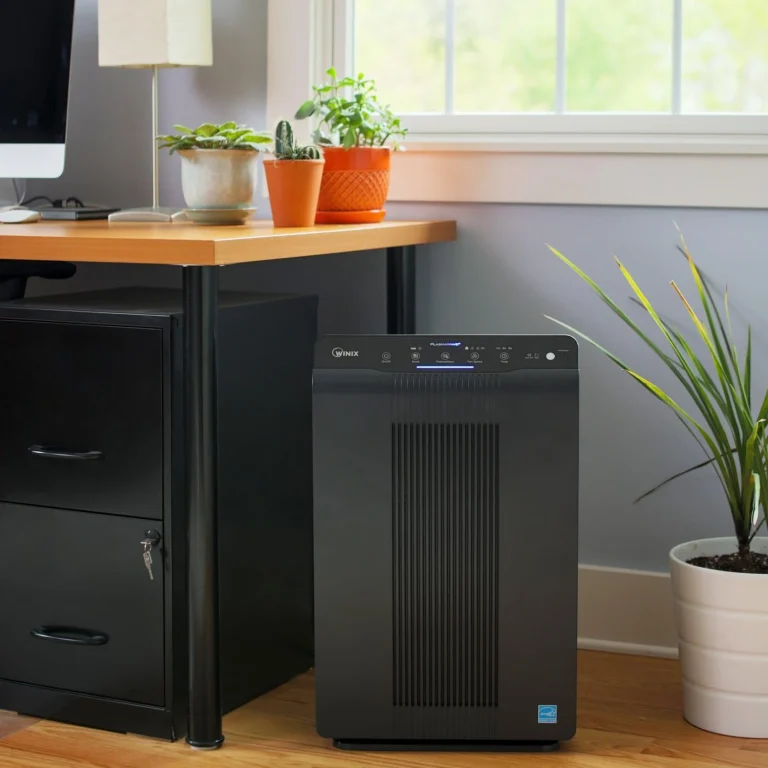
| Winix 5500-2 | Washable AOC carbon filter; weight not disclosed |
| Coway Airmega 250S | Activated Carbon + HEPA; carbon weight not disclosed |
| Blueair 311i Max Particle + Carbon | Carbon included; weight not disclosed |
“Not disclosed” does not mean “no carbon.” It means there is no verified carbon-weight figure available in the research used for this article.
Combined-media weights also should not be misrepresented. Austin Air’s figure is for activated carbon plus zeolite, while IQAir’s five-pound specification combines granulated activated carbon with impregnated activated alumina. These figures cannot be treated as pure-carbon weights or used as a simple performance ranking.
Can Activated Carbon Remove Litter Box Odor?
It can help with some airborne compounds associated with litter-box odor, but there is an important catch.
Ammonia can be part of the litter-box odor problem, and EPA technical guidance says ordinary activated carbon is not especially effective against ammonia.
Do not buy an unspecified activated carbon filter assuming it will efficiently remove litter-box ammonia.
Specialized impregnated or chemisorption media may behave differently, but performance is chemistry- and pollutant-specific. More importantly, filtration should come after source control:
scoop waste → maintain and clean the litter box → ventilate → use filtration for compatible airborne residual odors. For model choices designed around this specific problem, use our litter box odor air purifier guide.
What About Dog Smell and Wet Bedding?
Dog odor can come from body oils, damp fur, beds, blankets, crates and other textiles.
Activated carbon may reduce compatible airborne odor compounds after they reach the purifier, but it cannot clean the underlying source.
For persistent wet-dog or bedding odor, wash pet bedding and washable textiles, dry damp materials thoroughly, clean contaminated surfaces, groom the pet as appropriate, and ventilate the room where practical.
The purifier can then play a supplementary role by addressing residual airborne odor while its pre-filter and particle filter handle hair and airborne dander.
Will an Activated Carbon Filter Remove Pet Urine Odor?
If urine has soaked into carpet, padding, upholstery or another porous material, the contamination itself is the source.
An air purifier cannot remove that contamination from the material.
Activated carbon may reduce some airborne residual odor after the source has been treated, but it should not be described as removing urine odor “from the carpet” or “from the couch.”
For urine contamination, locate and treat or remove the affected material first. Think of air cleaning as the final stage of odor management—not a substitute for remediation.
How to Choose an Activated Carbon Filter for Pet Odors
1. Find out what type of carbon is used
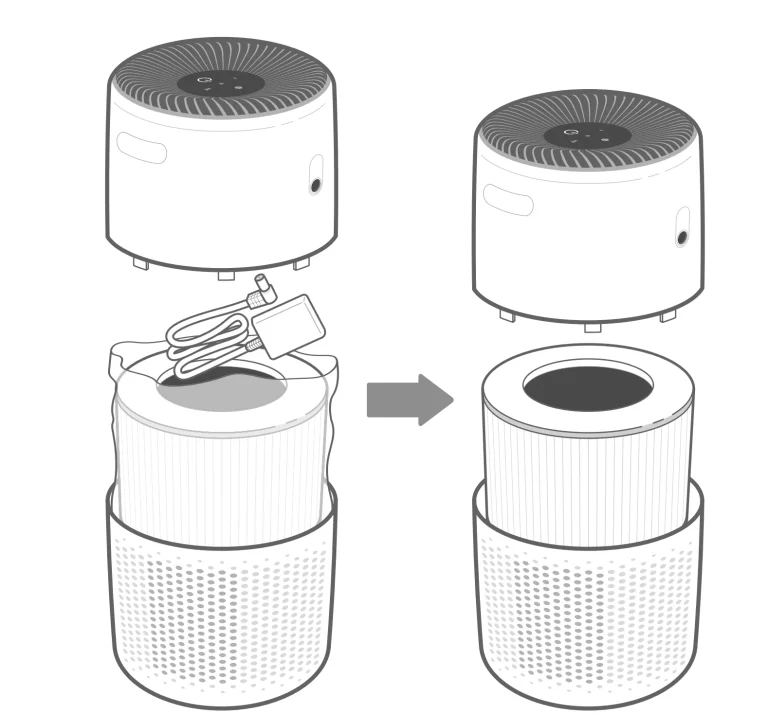
Look for descriptions such as activated carbon sheet, granular activated carbon, pelleted carbon, deep carbon bed, or impregnated/chemically treated gas media. When you are ready to compare actual models rather than filter concepts, see our carbon-filter air purifier product picks.
2. Look for carbon quantity—but don’t use it alone
If the manufacturer discloses carbon or total gas-media weight, that is useful information. A substantial bed generally offers more potential capacity than a very thin carbon layer, but mass alone cannot establish removal efficiency for a particular pet odor.
3. Check whether your problem is actually an odor problem
If the main complaint is floating hair, carbon is not the answer. If you are concerned about dander, prioritize particle filtration.
For hair, dander and odor together, look for pre-filter + particle filtration + gas filtration.
4. Size the purifier correctly
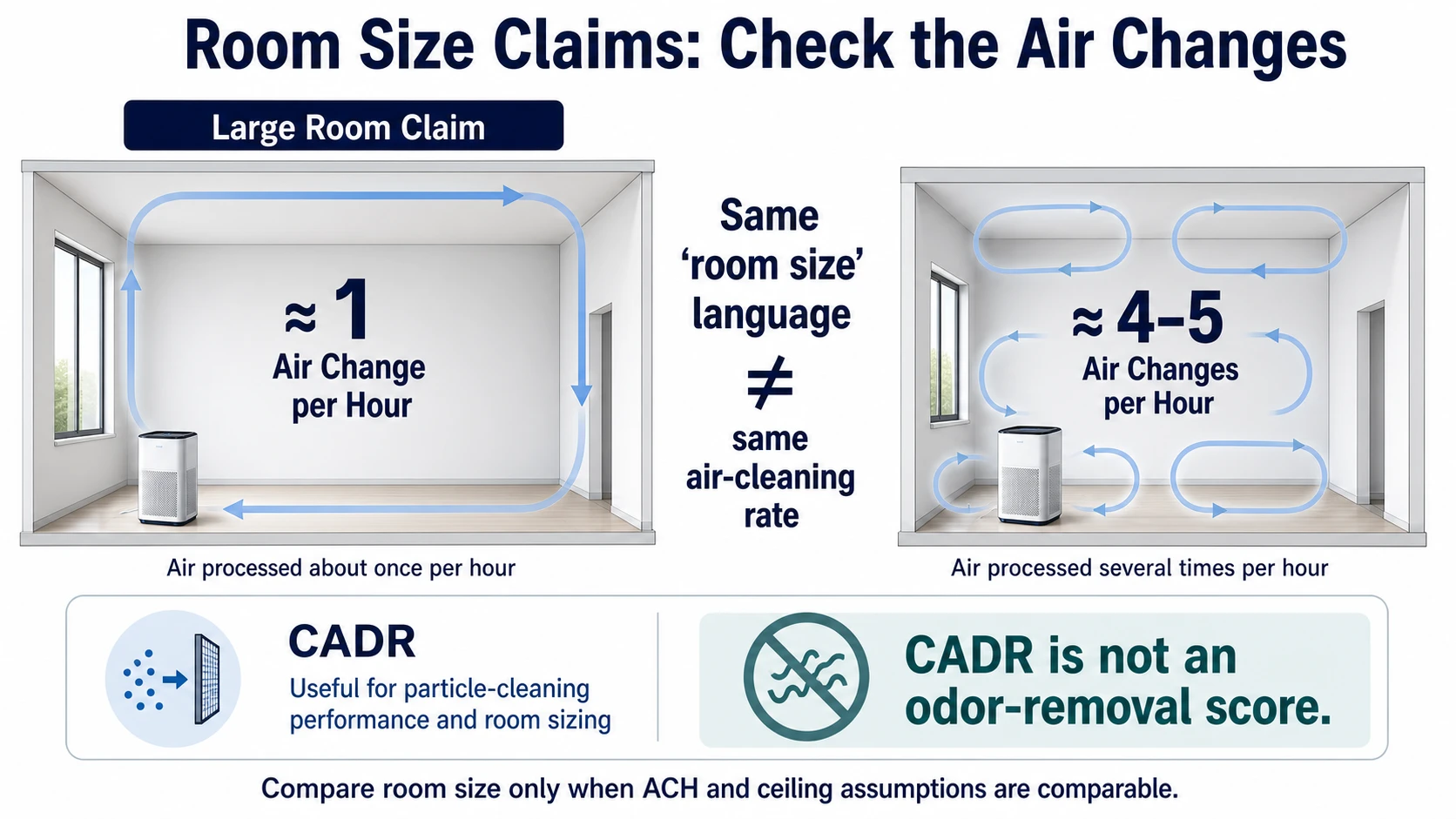
Room-size marketing can be misleading. One purifier might advertise coverage based on processing the room’s air approximately once per hour, while another publishes its room size at four or five air changes per hour. Those numbers should not be directly compared.
CADR is useful for particle-filtration sizing, but CADR is not an odor-removal score. Always check the ACH basis behind a room-size claim when possible.
5. Consider replacement-filter cost
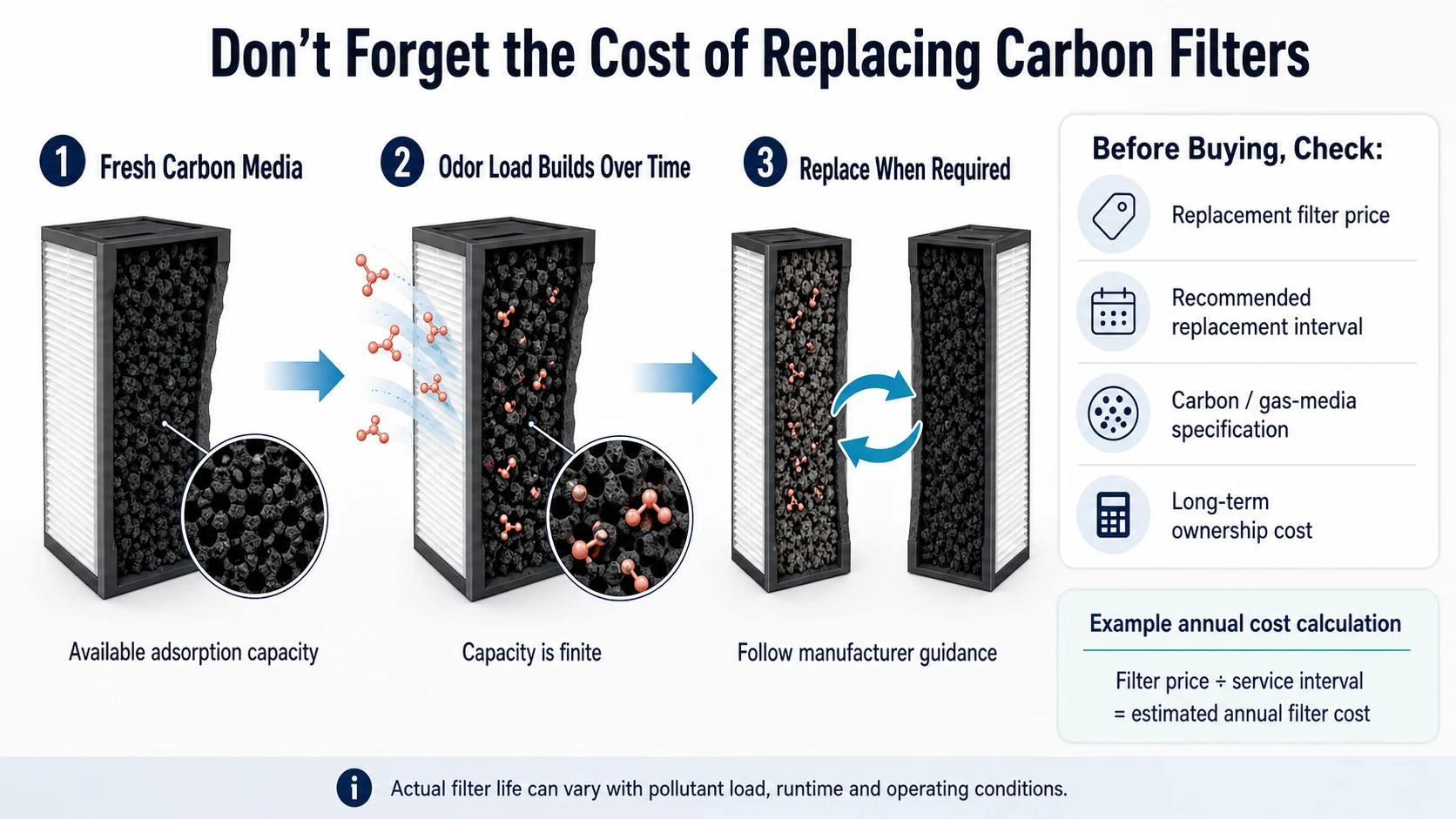
Activated carbon has finite adsorption capacity. Once the media becomes saturated, it must be replaced.
Based on manufacturer prices checked on August 11, 2026, a Winix 5500-2 Filter H was $54.99 with a 12-month interval, while the Blueair 211+ Particle + Carbon filter was $69.99 with an approximately six-month interval.
Austin Air listed its HealthMate replacement filter at $315 with a service interval of up to five years under normal residential use. That works out to about $63 per year only if the filter reaches that stated maximum interval.
Prices and actual replacement frequency can change, so these figures are examples rather than permanent price claims.
Are Activated Carbon Filters Safe Around Pets?
Avoid blanket claims that every activated carbon product is “100% safe for pets.”
Carbon contained inside an intact purifier filter is different from loose carbon media. Keep damaged filters, loose granules and carbon dust away from pets, especially animals that may chew the filter. Follow the manufacturer’s handling and replacement instructions.
Activated carbon filtration is also different from ionization and ozone-producing technologies. Activated carbon removes compatible gases through adsorption; it does not need to intentionally generate ozone.
If a purifier includes an ionizing or bipolar feature, evaluate that exact model and determine whether the feature can be disabled.
The Best Strategy for Pet Odor Is Source Control Plus Filtration
An activated carbon filter works best as part of a larger odor-control strategy.
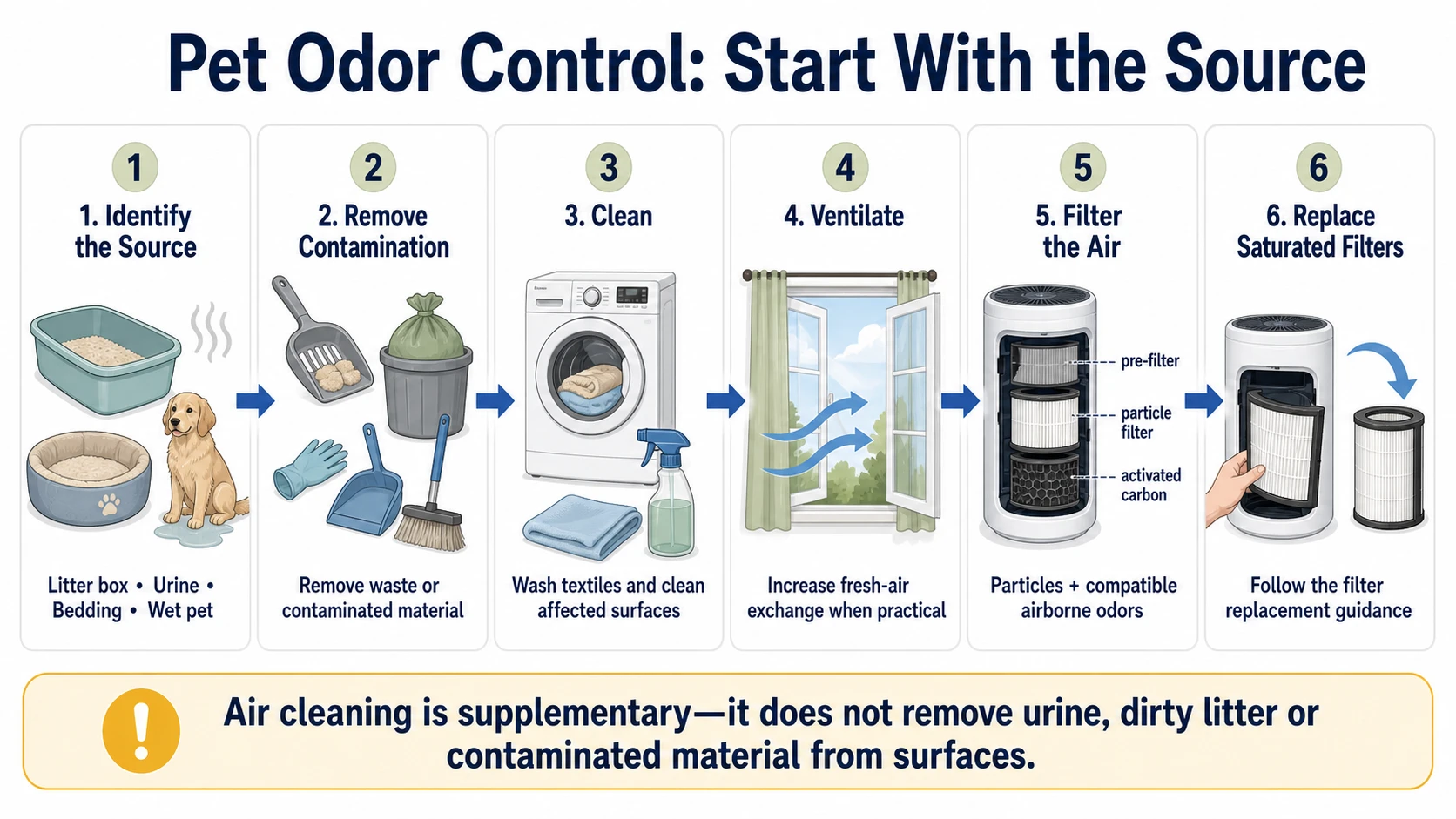
Identify the source → remove waste or contamination → clean washable surfaces and textiles → ventilate → filter airborne particles and compatible gases → replace saturated filters.
For a litter box, scoop and clean first. For a wet dog bed, wash and dry it. For urine in carpet, treat the contaminated material. For pet hair and dander, groom, vacuum and clean surfaces.
Then let the air purifier handle the pollutants that actually become airborne.
Bottom Line
An activated carbon filter for pet odors can be worth using, especially when the problem includes compatible airborne gases that particle filters cannot capture. But the words “activated carbon” on a filter are not enough to establish odor-removal performance.
Look for meaningful information about the type and amount of carbon, media chemistry, filter design, replacement interval and overall purifier sizing.
For persistent odor, a substantial granular, pelleted or deep gas-media bed is generally a more informative feature to investigate than a thin unspecified carbon layer—but even a large amount of carbon does not guarantee removal of every gas.
Different pet problems require different solutions:
Hair → pre-filter.
Airborne dander → HEPA or effective particle filtration.
Compatible airborne odors → activated carbon or appropriate gas media.
For litter boxes, wet bedding or urine contamination, deal with the source first. Activated carbon is most useful for reducing compatible airborne residual odors—not for replacing cleaning, ventilation or source removal.
Frequently Asked Questions
Does activated carbon really remove pet odors?
It can adsorb certain airborne gases and odor compounds. Its effectiveness depends on the carbon amount, chemistry, bed design, airflow, humidity, pollutant and filter condition. It should not be assumed to remove every pet-related gas.
Is activated carbon better than HEPA for pet odor?
For gaseous odors, activated carbon has the relevant role. HEPA filtration is designed for particles such as airborne pet dander rather than gases. Many pet households benefit from both particle and gas filtration.
Does activated carbon remove cat litter ammonia?
Ordinary activated carbon should not be assumed to efficiently remove ammonia. EPA technical guidance identifies ammonia as one of the gases for which ordinary activated carbon is not especially effective. Specialized treated media require product- and chemistry-specific verification.
Is more activated carbon always better?
More adsorbent and a deeper bed can increase potential capacity, but carbon weight alone does not prove performance against a specific gas. Chemistry, airflow, contact time, humidity and pollutant concentration also matter.
How often should a carbon filter be replaced?
There is no universal interval. Activated carbon has finite capacity, and replacement schedules vary by filter design, pollutant load and manufacturer guidance. Follow the product’s replacement guidance and watch for signs that odor control has declined.