Best Air Purifier for Cat Hair: Reduce Fur, Dander & Dust
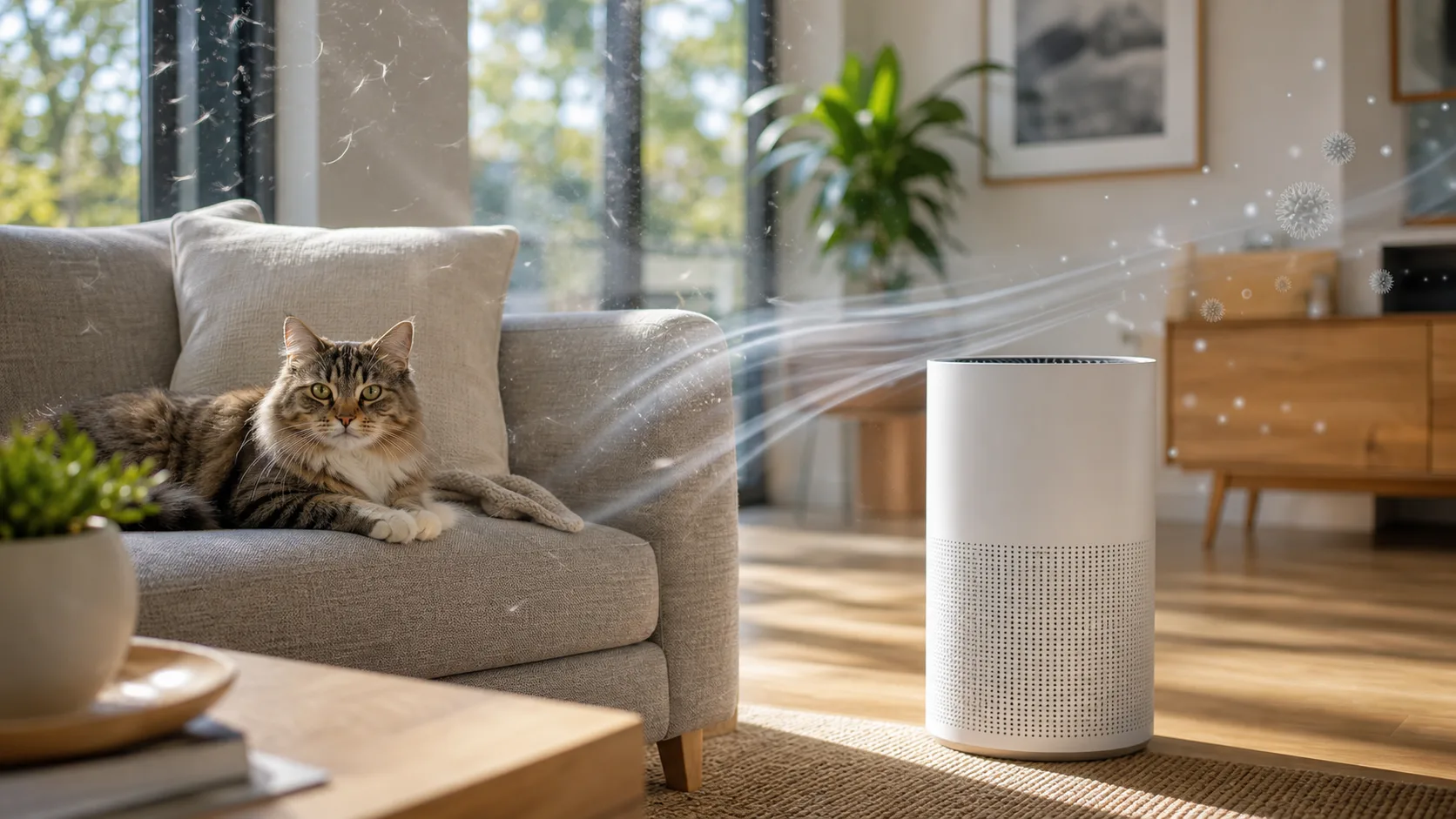
Living with a cat often means fur on the sofa, dust around the litter area, and fine particles that return soon after cleaning. An air purifier can help, but only with material that becomes airborne. The best air purifier for cat hair needs strong airflow, an easy-to-clean pre-filter, effective fine-particle filtration, and enough capacity for the room. Our top overall choice is the Levoit Vital 200S-P. The Winix 5520 is better for multiple cats and odors, the Blueair Blue Pure 511i Max suits quiet small rooms, and the premium IQAir HealthPro Plus XE offers the most substantial filtration system.
Quick Comparison
| Model | Best for | Recommended room size* | Particle filtration | Odor control | Noise | Estimated annual filter budget** |
|---|---|---|---|---|---|---|
| Levoit Vital 200S-P | Best overall | 388 sq. ft. | 3-stage; main particle filter | Moderate | 23–54 dB | $50–$100 |
| Winix 5520 | Multiple cats | 392 sq. ft. | True HEPA | Strong | Sleep mode available | About $80 |
| Blueair Blue Pure 511i Max | Bedroom or apartment | 237 sq. ft. | HEPASilent particle filtration | Light to moderate | 19–48 dB | About $40 |
| IQAir HealthPro Plus XE | Allergies and premium filtration | Up to 1,125 sq. ft. | HyperHEPA | Strong | 25–59 dB | $150–$250 |
* Recommended sizes use the manufacturers’ higher-air-change figures where available. “Up to” coverage claims based on one cleaning per hour are much less useful for fast allergen removal. ** Replacement costs are estimates based on typical filter life and may change with prices, fan speed, air quality, and the number of cats.
Cat Hair vs. Cat Dander: They Are Not the Same Problem
“Cat hair” is often used as a catch-all term, but fur, dander, allergens, and odors behave differently in the home.
Cat hair
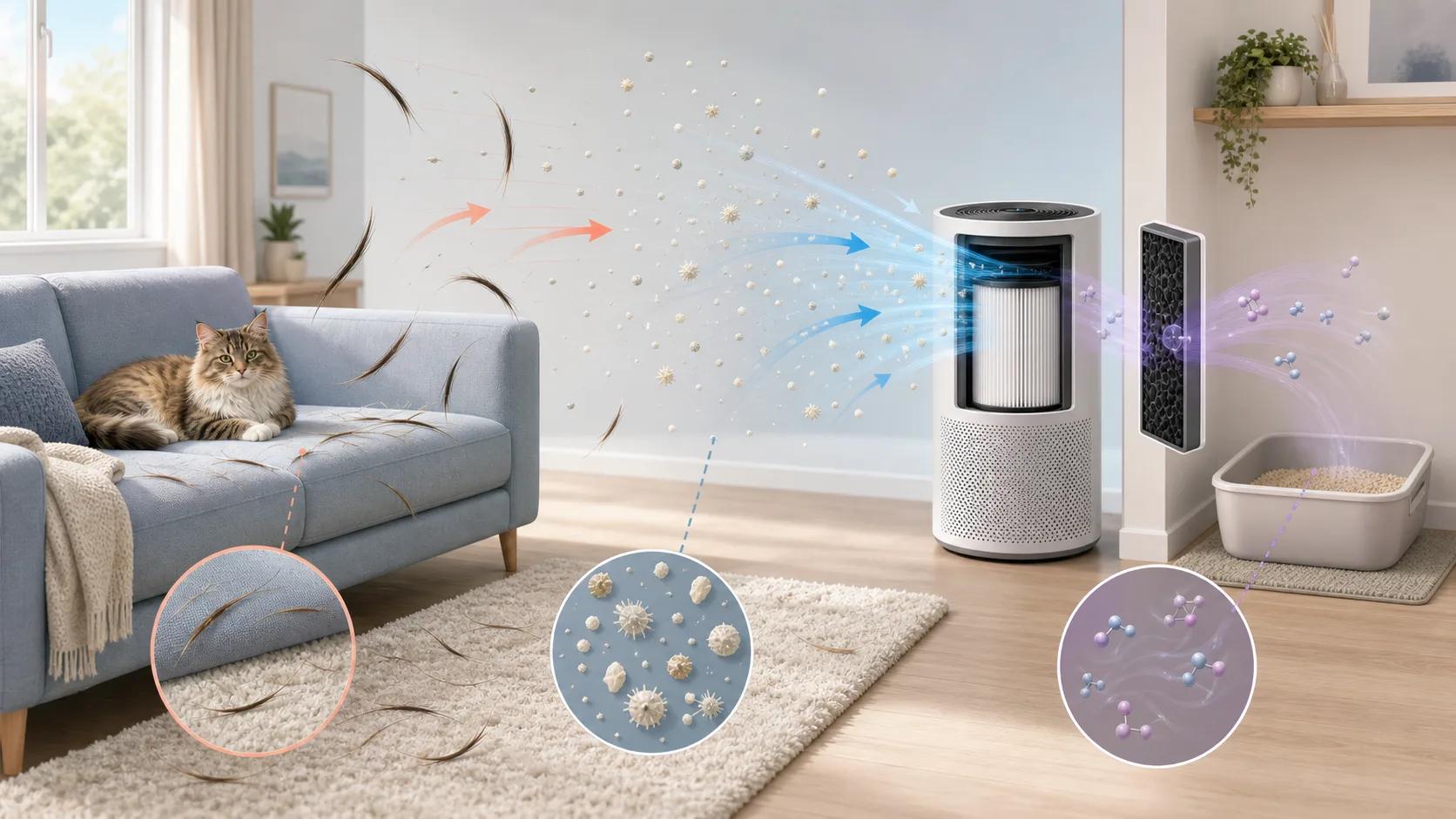
Cat hair is visible and relatively large—commonly tens of microns wide. Some becomes airborne when a cat jumps or is brushed, but much of it quickly settles. A pre-filter can capture hair that reaches the intake; it cannot pull embedded fur from carpet or upholstery. For a broader comparison of models designed to catch fur from cats and dogs, see our pet hair air purifier guide.
Cat dander and Fel d 1
Dander consists of tiny skin flakes. Cat-allergy symptoms are commonly associated with proteins such as Fel d 1, carried on microscopic particles from saliva and skin secretions. These stay airborne longer than visible fur and can spread between rooms. This is why a good pre-filter alone is not enough. Fine-particle filtration—usually HEPA or another independently tested high-efficiency system—is the more important feature for airborne dander and allergen-carrying particles. If sneezing or dander is the main concern, compare our best air purifiers for cat allergies.
Pet odors
Odors from litter, urine, skin oils, and food include gases and volatile compounds that particle filters do not remove. Activated carbon or other gas-sorbent media is required, though filtration must still supplement litter-box cleaning, ventilation, and source removal. For a closer look at carbon capacity and cat-odor control, see our guide to the best air purifiers for litter box smell.
The 4 Best Air Purifiers for Cat Hair
1. Levoit Vital 200S-P — Best Overall
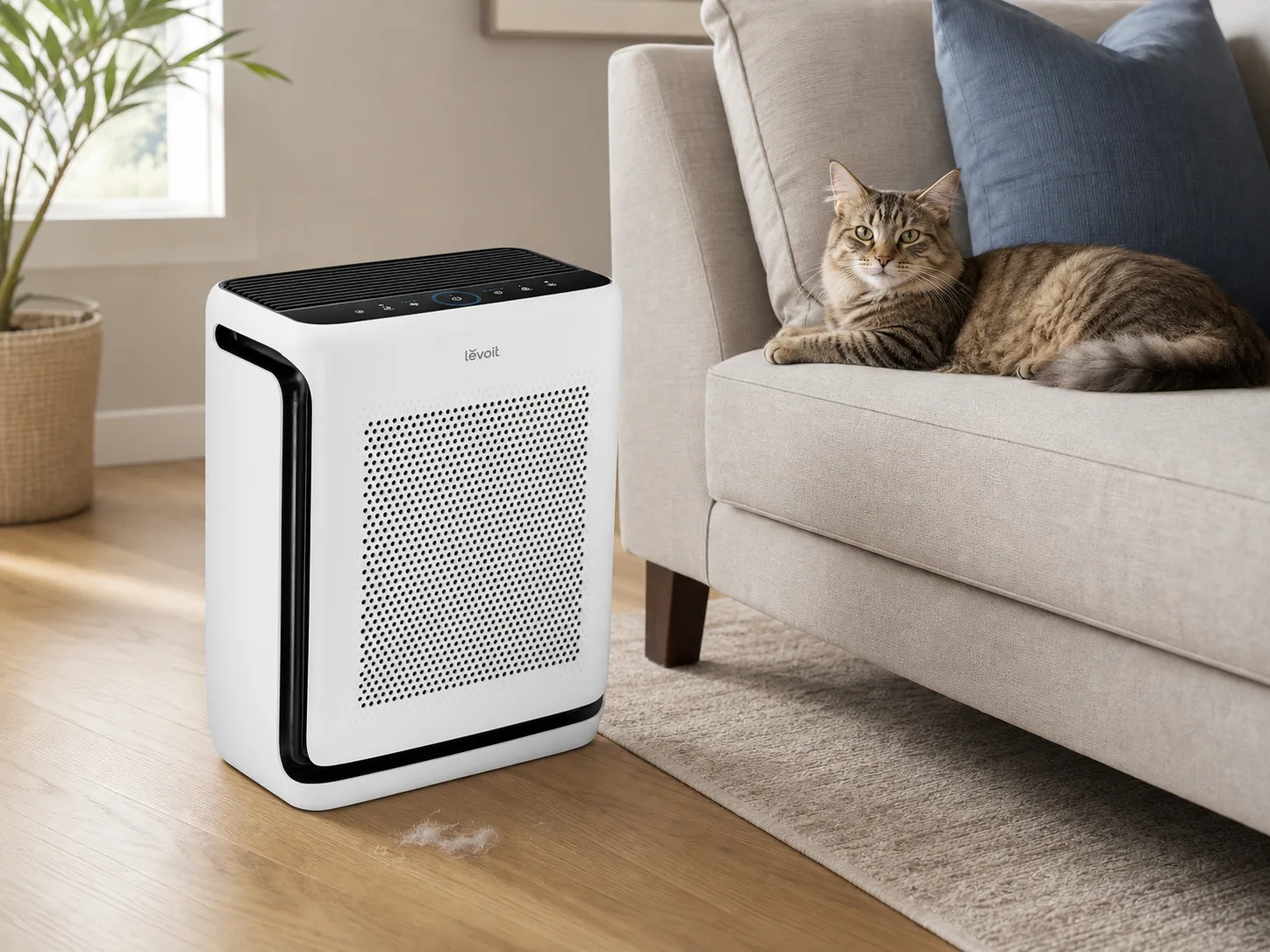
The Levoit Vital 200S-P offers the best balance for a typical one- or two-cat home. Its U-shaped inlet draws in airborne fur, while the washable pre-filter protects the main filter from large debris. If you want to compare it with other models from the brand, see our Levoit air purifiers for pets guide. Levoit lists a 250 CFM CADR and a 388-square-foot room size at 4.8 air changes per hour; the 1,862-square-foot claim is based on only one hourly change. Noise is 23–54 dB and rated power is 50 watts. Its three-stage system handles large particles, fine particles, and light odors, but the carbon layer is not ideal for persistent urine or multi-cat litter-box smells. Best for: Most cat owners, heavy shedding, and medium-size bedrooms or living spaces.
Levoit Vital 200S-P
- AHAM Verified Air Cleaning Excellent for Pet Hair & Dander Powerful Whole-Room Coverage U-Shaped Air Intake Design Easy-to-Clean Washable Pre-Filter Smart Air Quality Monitoring

- Pet-focused inlet and washable pre-filter
- Strong airflow for its price and size
- App controls, schedules, and automatic operation
- Reasonable replacement-filter cost
Cons:
- Carbon capacity is limited compared with deeper gas filters
- Maximum fan speed may be noticeable in a quiet room
2. Winix 5520 — Best for Multiple Cats
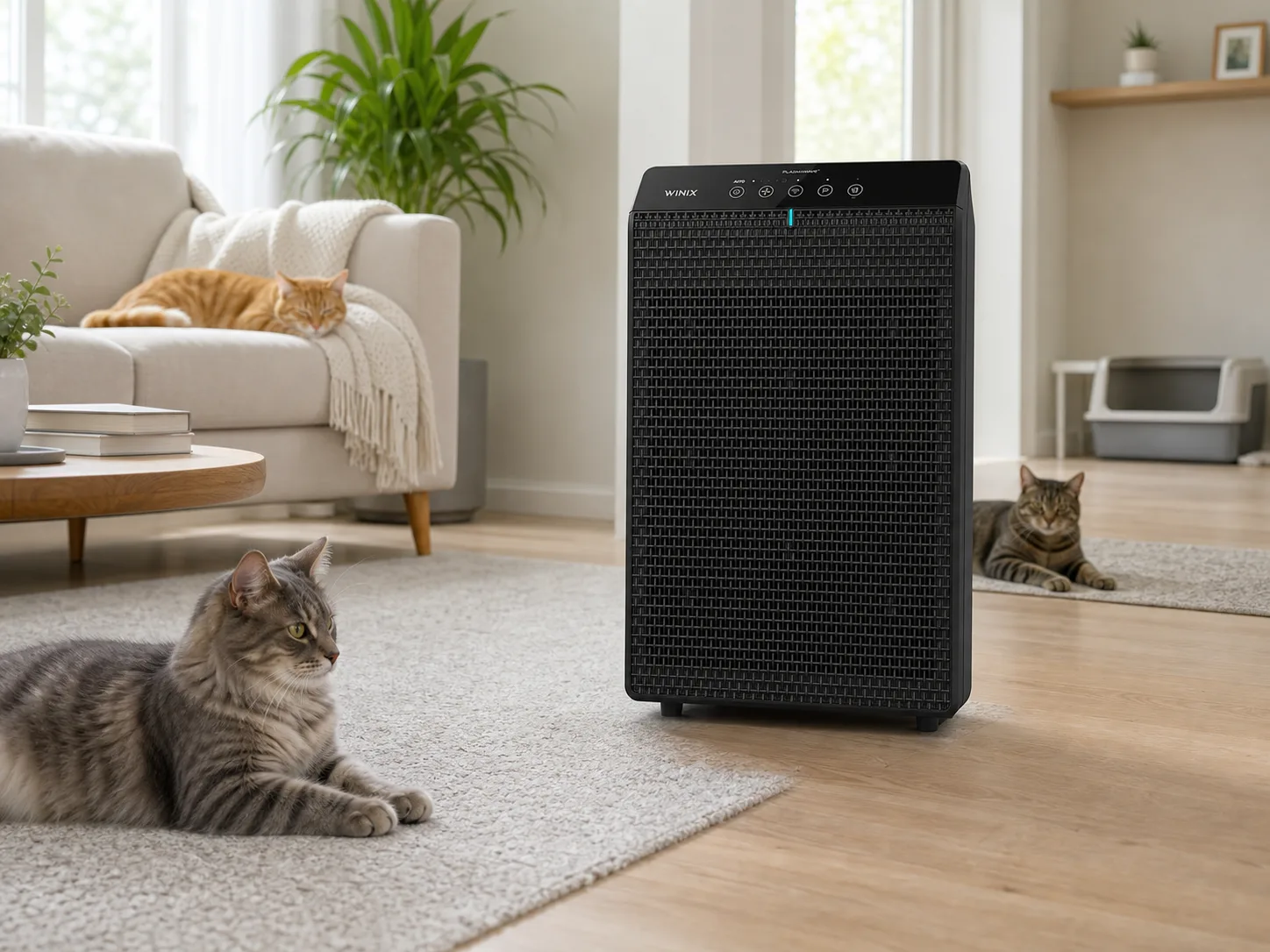
The Winix 5520 is a strong choice when several cats share a living room or odor matters almost as much as dander. It combines a washable fine-mesh pre-filter, True HEPA stage, and a washable AOC carbon filter that is more substantial than many compact purifiers’ thin carbon layers. You can also compare the 5520 with other Winix air purifiers for pet homes. The AHAM-verified room size is 392 square feet at 4.8 changes per hour; 1,882 square feet represents one hourly cleaning. Dust, pollen, and smoke CADRs are 252, 247, and 253 CFM. Sensors, auto mode, and Wi-Fi support continuous use. The model also includes PlasmaWave technology. Buyers who prefer filtration alone should review its controls and current certification. The pre-filter, HEPA stage, airflow, and carbon are its key pet-home features. Best for: Multiple cats, a busy living area, and stronger everyday odor control.
Winix 5520
- Powerful pet hair and dander capture Advanced odor reduction Easy-to-clean washable pre-filter Large room air cleaning Smart auto air quality control Quiet sleep-friendly operation
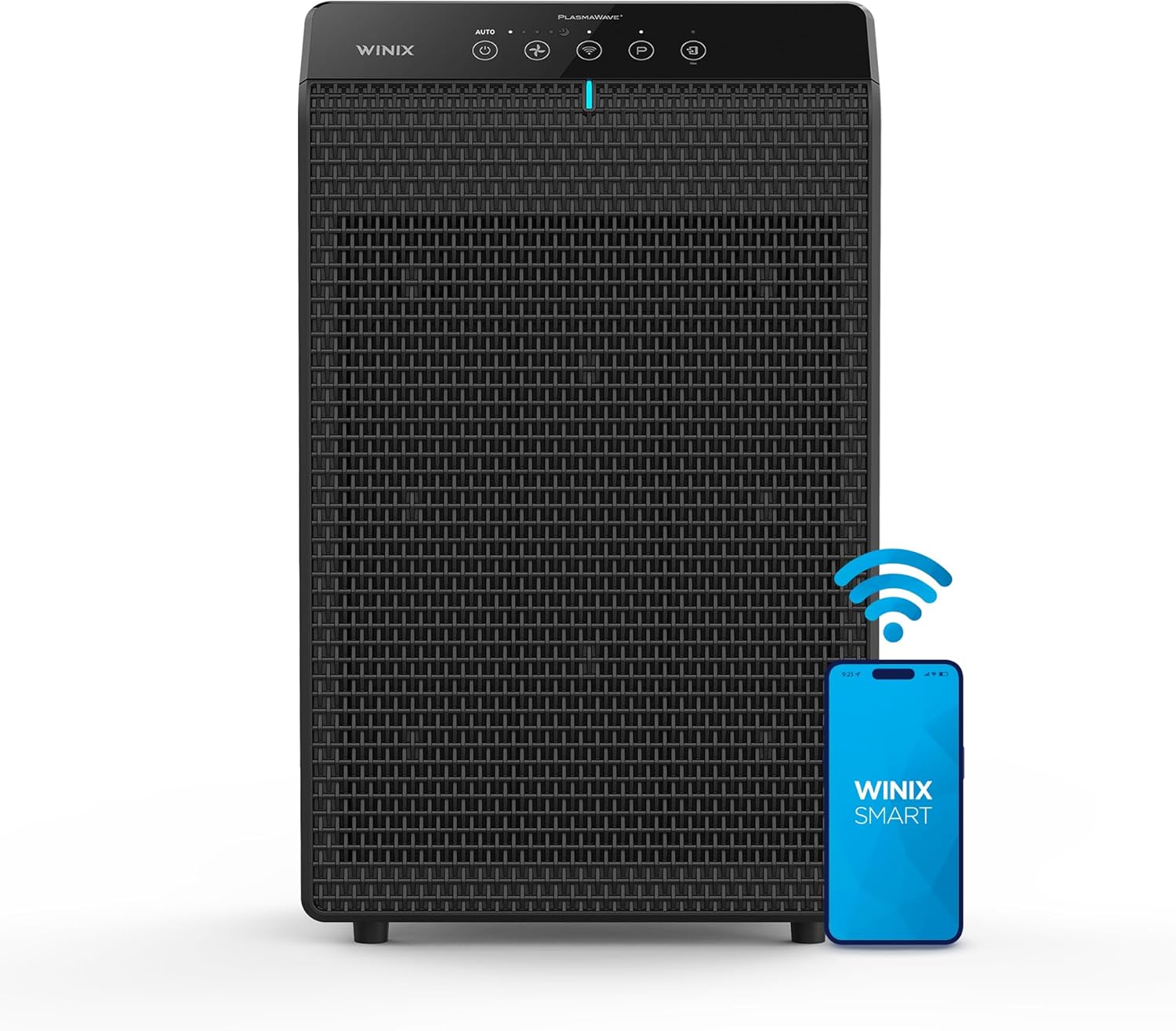
- High CADR and balanced particle performance
- Washable pre-filter and washable AOC carbon filter
- True HEPA filtration
- Auto mode, sleep mode, and smart controls
Cons:
- Larger than a small bedroom purifier
- More controls and filtration features than some buyers need
3. Blueair Blue Pure 511i Max — Best Quiet Option
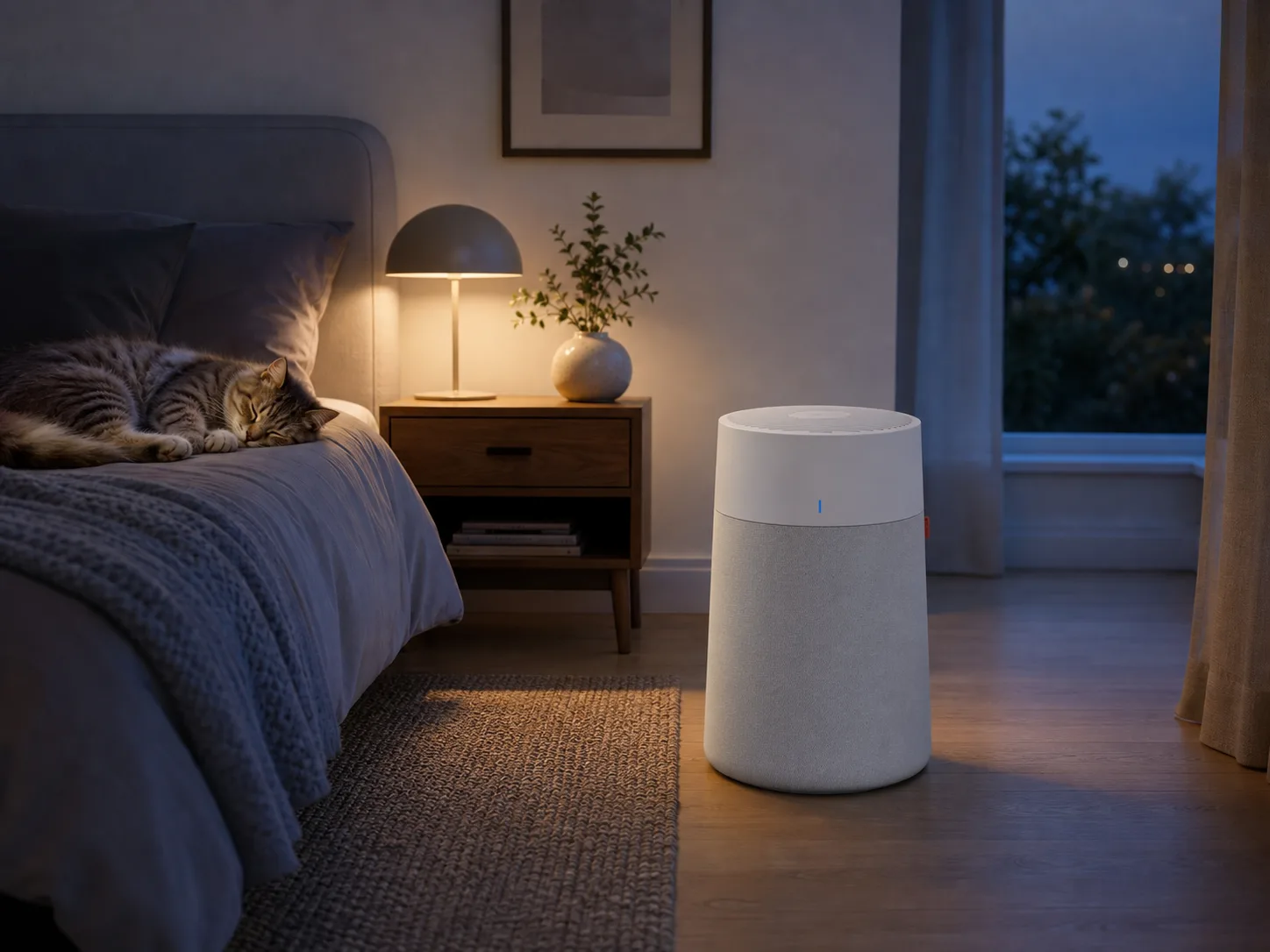
The Blueair Blue Pure 511i Max is a compact, low-energy bedroom or apartment option. Its 360-degree intake, washable fabric pre-filter, and 19 dB minimum noise suit light sleepers. Blueair recommends 237 square feet at 4.8 changes per hour. The 1,138-square-foot figure means one hourly cleaning, not rapid allergen removal. Smoke, dust, and pollen CADRs are 153, 159, and 174 CFM; energy use is 17 watts. HEPASilent combines mechanical and electrostatic filtration. The particle-and-carbon filter handles fine particles and light odors, while the fabric outer layer catches debris. Filter life is up to nine months depending on use. Best for: Small bedrooms, apartments, light sleepers, and low energy use.
Blueair Blue Pure 511i Max
- HEPASilent™ Particle Filtration Excellent for Bedrooms & Apartments Quiet 19 dB Sleep-Friendly Operation 360° Air Intake Design Captures Pet Dander & Allergens Smart Air Quality Monitoring

- Very quiet at low speed
- Compact and lightweight
- 360-degree intake and washable fabric pre-filter
- Low energy consumption
Cons:
- Lower CADR than the Levoit and Winix
- Standard carbon filter is intended for light rather than severe odors
4. IQAir HealthPro Plus XE — Best Premium Choice
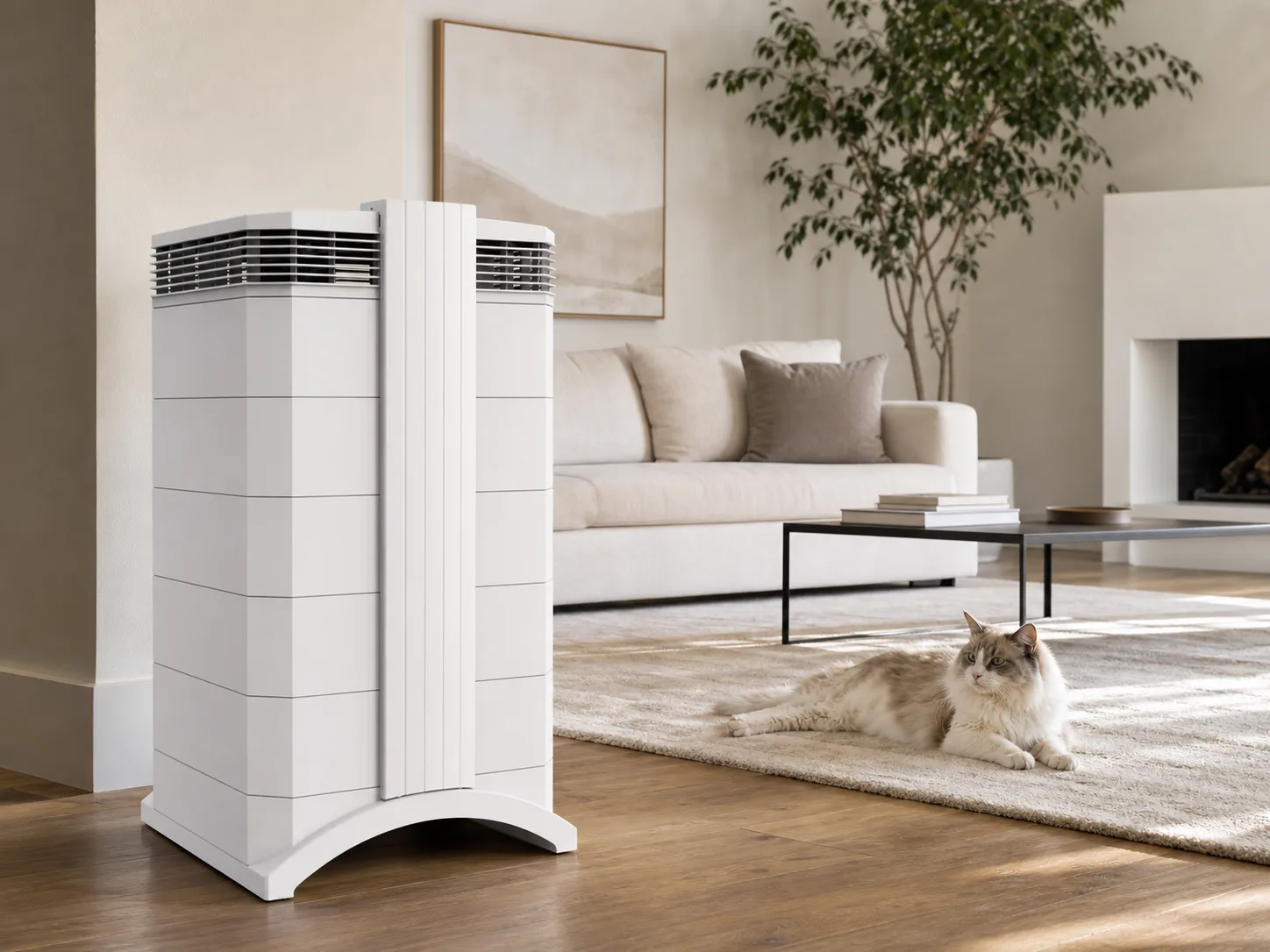
The IQAir HealthPro Plus XE prioritizes particle and gas filtration over price or portability. Its three stages are a PreMax pre-filter, V5-Cell gas-and-odor filter, and HyperHEPA final filter. The XE adds Wi-Fi and real-time PM2.5 monitoring. IQAir lists coverage up to 1,125 square feet and airflow up to 300 CFM. Six speeds span 25–59 dB and 27–215 watts. At 35 pounds, it is heavy, although casters help. Its dedicated gas stage is the strongest here for mixed particle and odor concerns. The tradeoff is a high price and multiple filters. IQAir estimates 18 months for PreMax, 24 months for V5-Cell, and 48 months for HyperHEPA at ten hours daily on speed three; actual life varies. Best for: Allergy-conscious households, larger spaces, and buyers who want premium gas filtration.
IQAir HealthPro Plus XE
- Premium Allergy Protection Captures Pet Dander & Fine Particles Advanced HyperHEPA Filtration Powerful Gas & Odor Control Smart Air Quality Monitoring Swiss-Made Quality

- High-performance fine-particle filtration
- Dedicated gas-and-odor media
- Individually monitored, long-life filter stages
- Real-time PM2.5 monitoring
Cons:
- Expensive to buy and maintain
- Heavy, bulky, and power-hungry at top speed
How to Choose an Air Purifier for Cat Hair and Dander
Start with CADR and room size, not an “up to” claim. Four to five air changes per hour removes newly suspended particles faster than one. For an allergy-focused bedroom, size up and remember that closed doors limit air movement. Choose an accessible pre-filter. Fur can restrict airflow before the main filter is spent, so a washable or vacuumable first stage lowers costs. Never wash a filter unless its manual permits it. For dander, choose HEPA or independently tested high-efficiency filtration. The EPA says HEPA can theoretically remove at least 99.97% of 0.3-micron airborne particles. Filter efficiency is not whole-room performance; airflow and runtime still matter. For odors, favor more activated carbon or dedicated gas media. CADR applies to particles, not gases, and source control remains essential. Finally, compare noise and filter cost. A larger unit at medium speed may be easier to live with than a small one constantly on high.
Do Air Purifiers Actually Remove Cat Hair?
Yes—but only hair that becomes airborne and reaches the intake. A purifier can capture floating fur, dander, dust, and allergen-carrying particles. It cannot remove fur already attached to carpet, curtains, bedding, or furniture, and it will not replace a vacuum cleaner.
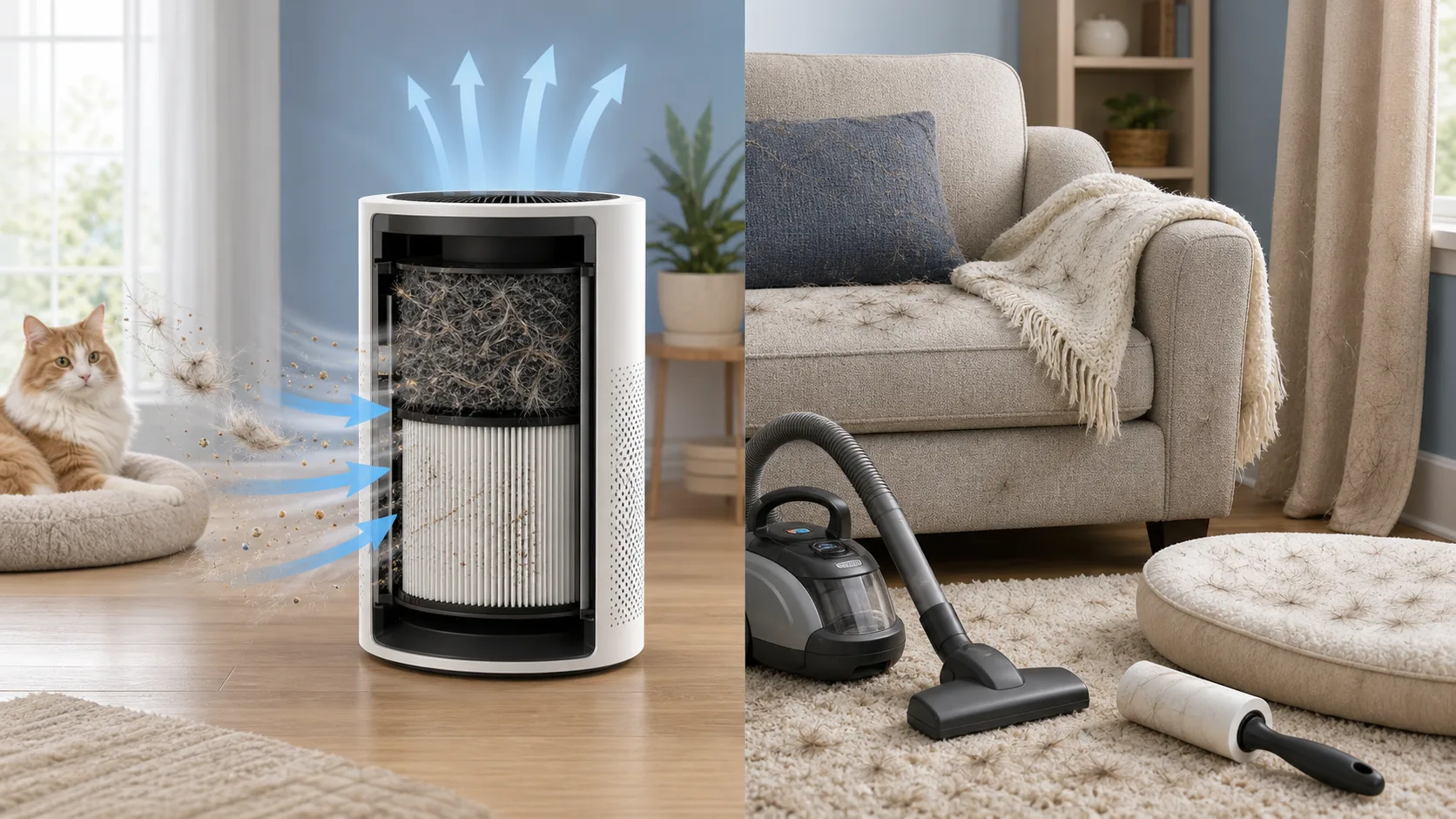
The most effective routine combines continuous air filtration with grooming, vacuuming, damp dusting, washing pet bedding, and regular litter-box cleaning. Filtration works best as one layer of exposure control, not as a complete cleaning system.
Best Placement for Cat Hair Reduction
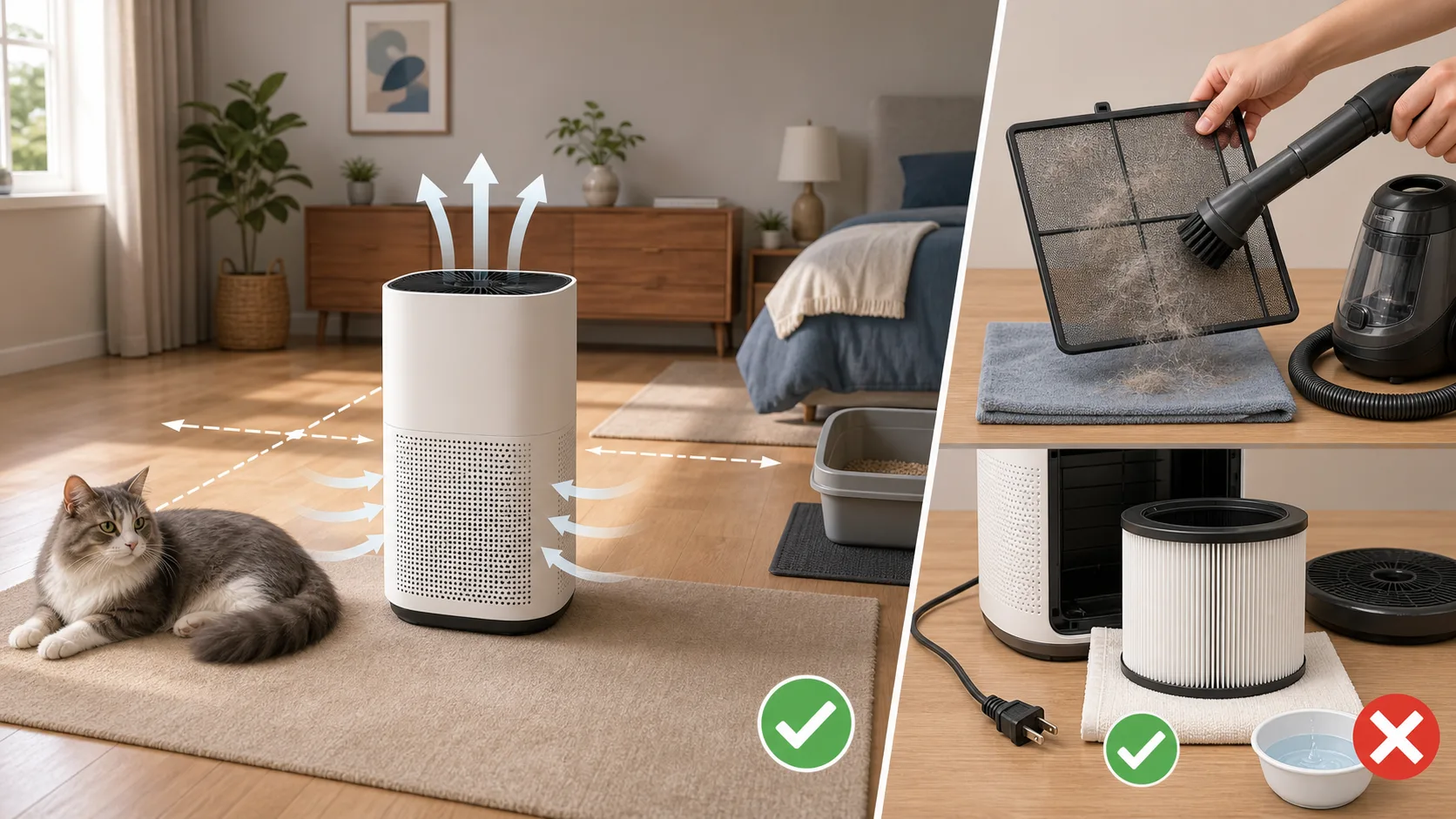
Place it where your cat sleeps, plays, or sheds most. Keep the intake and outlet clear and avoid hiding the unit behind furniture or in a corner. One purifier cannot efficiently clean several closed rooms. Use separate units in priority spaces when possible. Continuous operation at a tolerable noise level beats occasional short bursts.
Maintenance Tips for Cat Owners
- Inspect or clean the pre-filter every two to four weeks; check it more often during shedding season.
- Vacuum washable pre-filters first, then wash only if the manual permits it, and let them dry completely.
- Replace the main filter according to its indicator and physical condition—often every six to twelve months for compact models.
- Groom cats regularly, vacuum upholstery and floors, and wash bedding to remove settled material.
- Clean odor sources promptly instead of relying on carbon media to mask them.
Final Verdict
The Levoit Vital 200S-P is the best air purifier for cat hair for most homes because it combines a pet-friendly intake, washable pre-filter, useful airflow, quiet operation, and manageable upkeep. Choose the Winix 5520 for several cats or better odor control, the Blueair Blue Pure 511i Max for a quiet small room, or the IQAir HealthPro Plus XE when premium particle and gas filtration justify the higher cost. If you need to compare broader pet-related needs beyond cat hair, start with our complete guide to the best air purifiers for pets. Match the purifier to the room at a meaningful air-change rate, clean its pre-filter, and run it consistently. That matters more than buying a powerful unit and leaving it on low in the wrong room.
Frequently Asked Questions
Will an air purifier stop cat hair from collecting on furniture?
No. It may reduce some airborne fur before it settles, but most hair on furniture must be removed by vacuuming, brushing, or a lint tool.
Is HEPA filtration necessary for cat dander?
High-efficiency filtration is preferable because allergen-carrying particles are much smaller than visible hair. HEPA is a clear benchmark, though other tested systems may also perform well.
How long should I run an air purifier with cats?
Run it continuously if practical at the highest comfortable speed. Auto mode is convenient, but sensors may not respond equally to every allergen.
Should I put the purifier next to the litter box?
Nearby placement can help capture disturbed dust and some odor, but keep the unit away from splashes and do not block its intake. Litter maintenance and ventilation remain more important for controlling strong smells.
Can one air purifier handle multiple cats?
Yes, with adequate airflow and frequent pre-filter cleaning. You may need a larger unit, more carbon media, or separate purifiers for priority rooms.